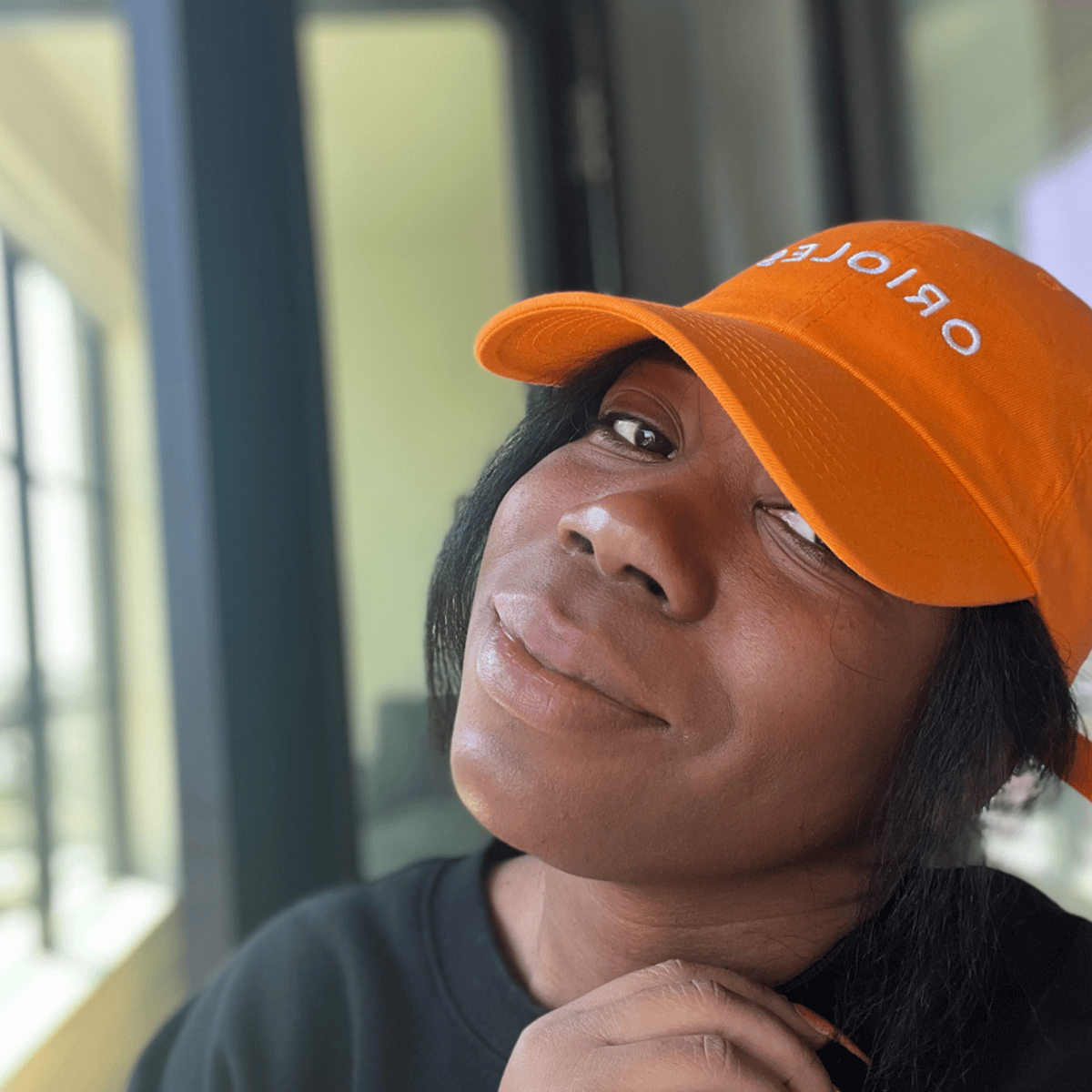
I made a reel the other day about buying ornaments in Hampden.
I was standing in front of a display of hand-painted baubles at a local shop—the kind of place where everything feels a little precious, a little overpriced if you're being honest about it. Eight to fifteen dollars for something that has, by general standards, no utility. I said as much in the video:
"On its face, it's expensive. But the utility here is joy. So I invite you to buy an ornament this year. We're not spending money with the capitalist overlords, but you can shop small and you can shop local and you can buy just a little piece of joy."
The video did what it was supposed to do gave people permission to participate in small-scale commerce without the guilt of consumption. But after I posted it, I sat with my other content, the episode of the Charm Citizen podcast with my guest - LBS’ Policy Think Tank Researcher Lawrence Grandpre.

CHARM CITIZEN PODCAST
I live and grew up in Park Heights. I've lived in Baltimore for all forty years of my life, and I'm raising my kids here. The Pimlico development is coming - billions of dollars in investment that everyone says it will "transform" the neighborhood. And I'm stuck in this impossible position that I talked about on the on the episode : I don't want to be priced out of my own neighborhood, but I also can't buy paint and a paintbrush within walking distance of my house and definitely not an artisan made ornament.
These are the kinds of shops I wish existed in Park Heights.
I share in conversation : “My son still goes to an art-based school in Park Heights. Around that school, there is no art supply store. When my kids get a burst of inspiration, and children always have bursts of inspiration - I can't walk down the block and buy them what they need. I have to leave my neighborhood. I have to take my dollars somewhere else.”
And this is where the conversation gets complicated. Because if I advocate for an art supply store in Park Heights, if I say I want a yoga studio or a place to buy hand-painted ornaments or literally anywhere to access basic creative materials for my children, I'm told I'm inviting gentrification. That these amenities, these signs of "quality of life" are precursors to displacement.
So what am I supposed to want? Survival resources but not thriving resources? Narcan but not paintbrushes? The conversation about my neighborhood's needs gets reduced to pathology, to crisis management, when I'm really just trying to be an everyday mom raising an everyday family.
The Binary That Traps Us
Black neighborhoods are told we can have disinvestment or we can have displacement, but we can't have investment without gentrification. We can have corner stores but not boutiques. We can have liquor stores but not wine bars. We can have check-cashing places but not artisan shops selling hand-painted ornaments.
The presence of "nice things" has become a signal. When the coffee shop opens, when the yoga studio moves in, when you can suddenly buy a fifteen-dollar ornament within your zip code that's when longtime residents start looking at For Sale signs and doing the math on their property taxes. The joy-producing shops don't just sell products; they announce arrival. They say: this neighborhood is for people with disposable income now. And if you don't have it, you should probably start planning your exit.
But why? Why can't Park Heights have an art supply store and still be Park Heights? Why can't my neighbors and I access the same small pleasures, the overpriced ornament, the decent latte, the yoga class without it meaning our time here is up?
The answer, of course, is that we've built an economy where "nice things" and affordability are treated as mutually exclusive. Where amenities don't serve existing residents they serve the residents who will replace them.
What If We Refused the Binary?
This is where Charm Citizen - this newsletter, the podcast, the brand comes in for me. Because I'm interested in what it looks like to refuse this impossible choice.
What if we insisted that every neighborhood deserves both stability and quality of life? What if the eight-dollar ornament, the art supply store, the small business selling things that spark joy what if these weren't harbingers of displacement but civic infrastructure that belongs in every community?
When I tell people to buy local, to shop small, to spend their fifteen dollars at the neighborhood boutique instead of on Amazon, I'm not just talking about supporting small business. I'm talking about building the economic ecosystem we actually want to live in and experience. One where money circulates locally. Where the person selling you the ornament lives three blocks away. Where your dollars don't extract wealth from your community but recirculate within it.
But that ecosystem has to be built everywhere, not just in the neighborhoods that have already been deemed "worth investing in." Park Heights needs the ornament shop. We need the art supply store. We need the small joys and the everyday amenities that make a place feel like it's for living, not just for surviving.
And we need them without the threat of displacement lurking behind every new storefront.
Civic Engagement as Economic Architecture
This is my civic work. And probably not the kind that gets funded by foundations or celebrated at nonprofit galas, but the kind that reshapes how resources move through a city when the right people speak up for Joy and justice.
Every time you choose where to spend eight dollars, you're voting. You're saying: I want this kind of business to exist here. I want this person to be able to make a living in this neighborhood. I want the economy to work this way instead of that way.
And we also have to organize for policy that protects residents when investment comes. We need community land trusts. We need strong rent control. We need anti-displacement strategies that don't treat economic development and housing stability as opposing forces. This isn’t my strength but there are organization like LBS and Fight Blight Bmore that do this work.
Because the goal can’t be to keep Park Heights frozen in disinvestment. The goal should be for Park Heights to have everything - the art supply store, the local boutique, the places that sell small joys and overpriced ornaments. And for the people who live here like me, can still be here to enjoy them.
That's the Charm Citizen version of economic development: not displacement disguised as progress, but actual community wealth-building that allows people to exist in their full complexity. To survive and to thrive. To need Narcan distribution (I guess) and to want hand-painted ornaments. To advocate for crisis resources and to demand access to joy.
In a perfect Baltimore, I would get to direct my Instagram audience to Park Heights not just for during Preakness.
Joy isn't a luxury. It's civic infrastructure. And every neighborhood deserves access to it.